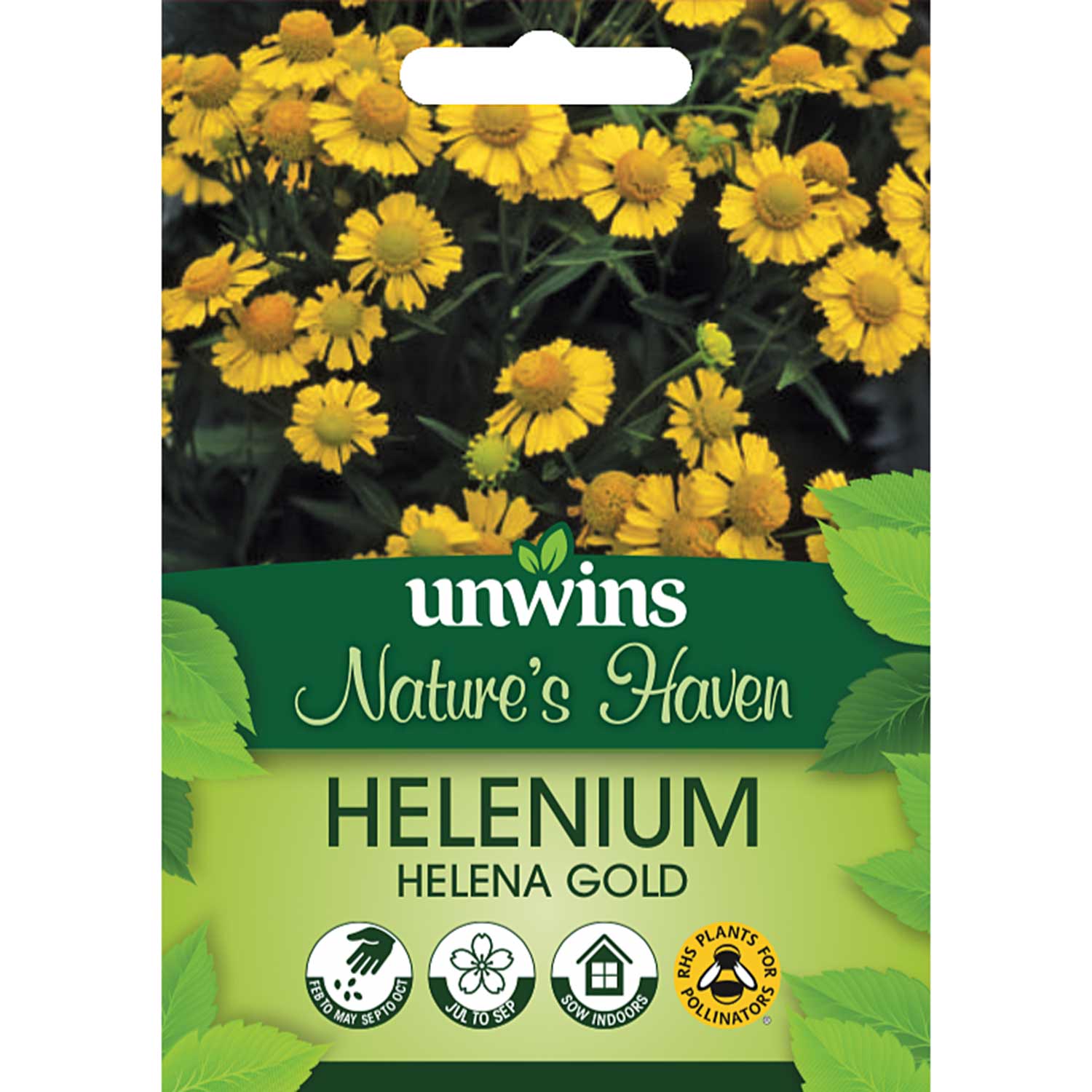
Helenium Seeds 'Helena Gold'
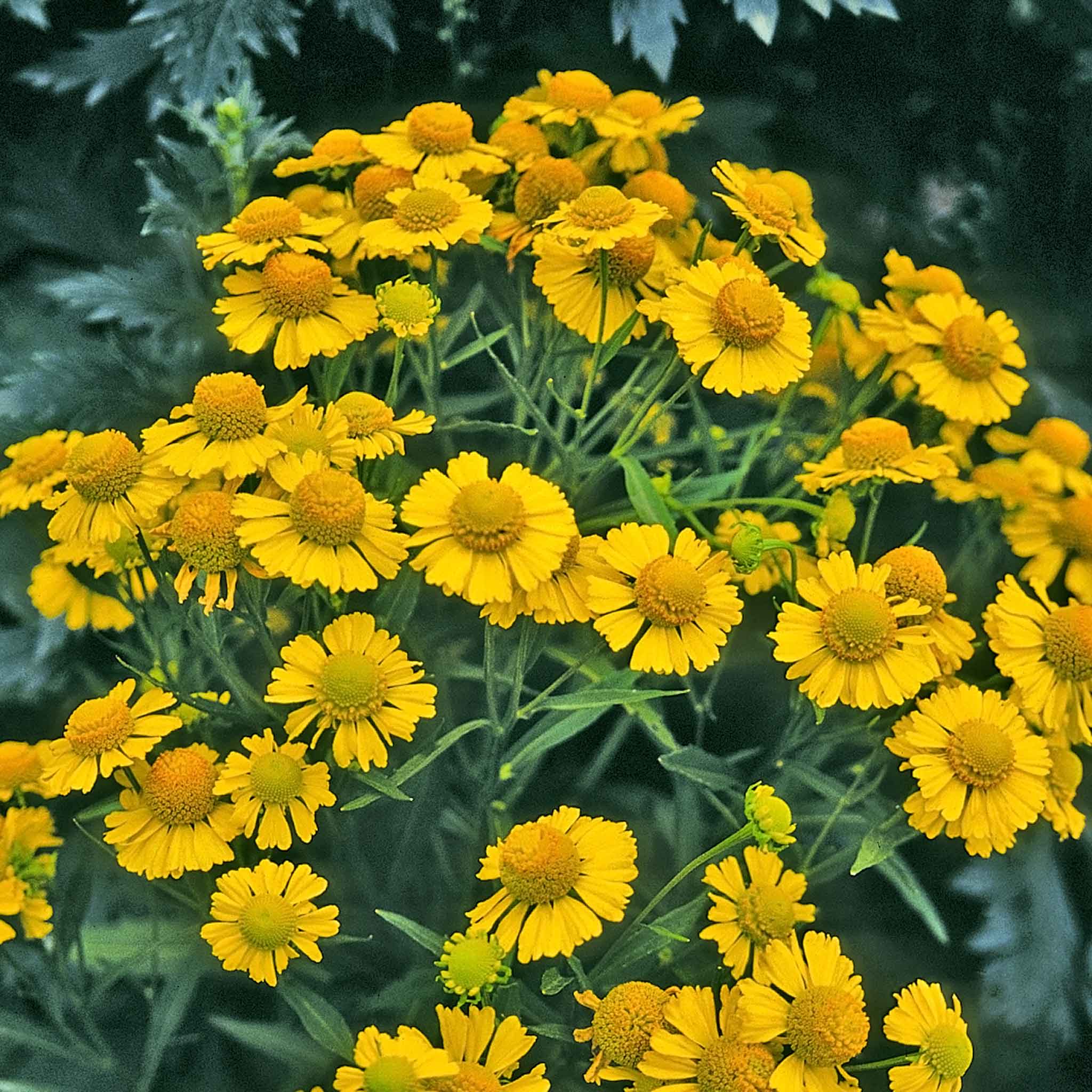
- Big daisy-like yellow flowers
- Late summer colour
- Popular with pollinators
- Beautiful cut flowers
Helenium ‘Helena Gold’ looks dazzling in late summer with its gleaming yellow daisy-like flowers on long stems. The prominent pollen-rich centres are a magnet for butterflies and bees, adding to the plant’s appeal. This robust perennial usually flowers in its first year from sowing. It looks fantastic in borders and containers, and makes beautiful cut flowers.
Sow indoors
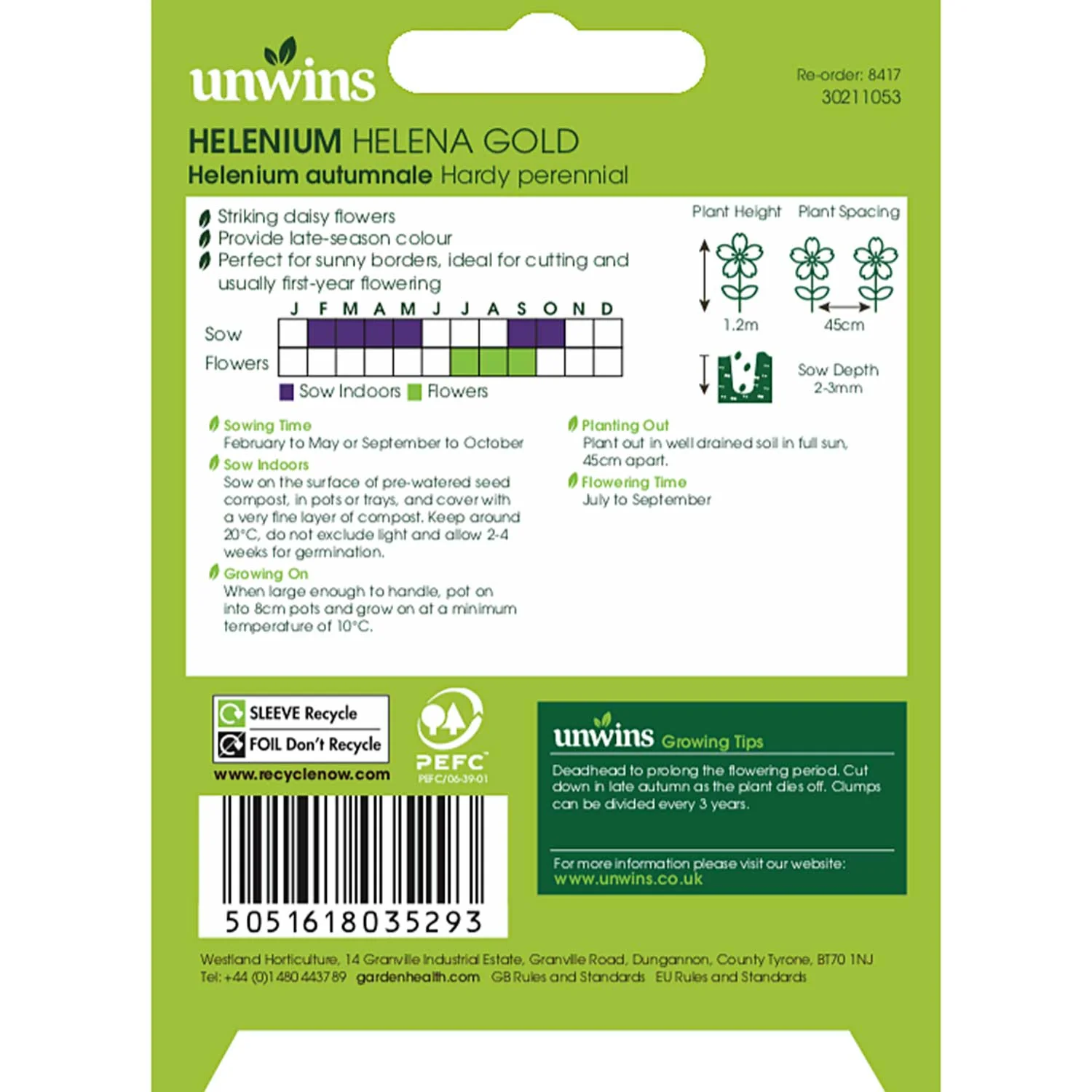
Sow on the surface of pre-watered seed compost, in pots or trays, and cover with a very fine layer of compost. Keep around 20°C, do not exclude light and allow 2-4 weeks for germination.
Grow on
When large enough to handle, pot on into 8cm pots and grow on at a minimum temperature of 10°C.
Plant out
Plant out in well drained soil in full sun, 45cm apart.
Aftercare
Deadhead to prolong the flowering period. Cut down in late autumn as the plant dies off. Clumps can be divided every 3 years.
Original: $4.74
-65%$4.74
$1.66Product Information
Product Information
Shipping & Returns
Shipping & Returns
Description
- Big daisy-like yellow flowers
- Late summer colour
- Popular with pollinators
- Beautiful cut flowers
Helenium ‘Helena Gold’ looks dazzling in late summer with its gleaming yellow daisy-like flowers on long stems. The prominent pollen-rich centres are a magnet for butterflies and bees, adding to the plant’s appeal. This robust perennial usually flowers in its first year from sowing. It looks fantastic in borders and containers, and makes beautiful cut flowers.
Sow indoors
Sow on the surface of pre-watered seed compost, in pots or trays, and cover with a very fine layer of compost. Keep around 20°C, do not exclude light and allow 2-4 weeks for germination.
Grow on
When large enough to handle, pot on into 8cm pots and grow on at a minimum temperature of 10°C.
Plant out
Plant out in well drained soil in full sun, 45cm apart.
Aftercare
Deadhead to prolong the flowering period. Cut down in late autumn as the plant dies off. Clumps can be divided every 3 years.